Perhaps while sipping a cocktail on a beach, or simply enjoying a lazy Sunday morning? That's the allure of passive income, a concept that stands in intriguing contrast to the familiar grind of active income. For many, it's the holy grail of financial freedom, but is it truly the "better" long-term strategy?
The truth is, both active and passive income play crucial roles in building wealth and achieving financial goals. They're two sides of the same coin, each with its unique strengths and weaknesses. Understanding the fundamental difference between active and passive income is the first step towards crafting a robust and sustainable financial future.
As an expert in navigating the intricate world of income generation, I've seen firsthand how misconceptions about these two income types can derail financial plans. This blog post isn't just about defining terms; it's about exploring the practical realities of passive income vs active income, diving into concrete examples of passive income, discussing how to build passive income, and ultimately helping you decide which is better: passive income or active income for your personal long-term strategy.
1. What is the difference between passive income and active income?



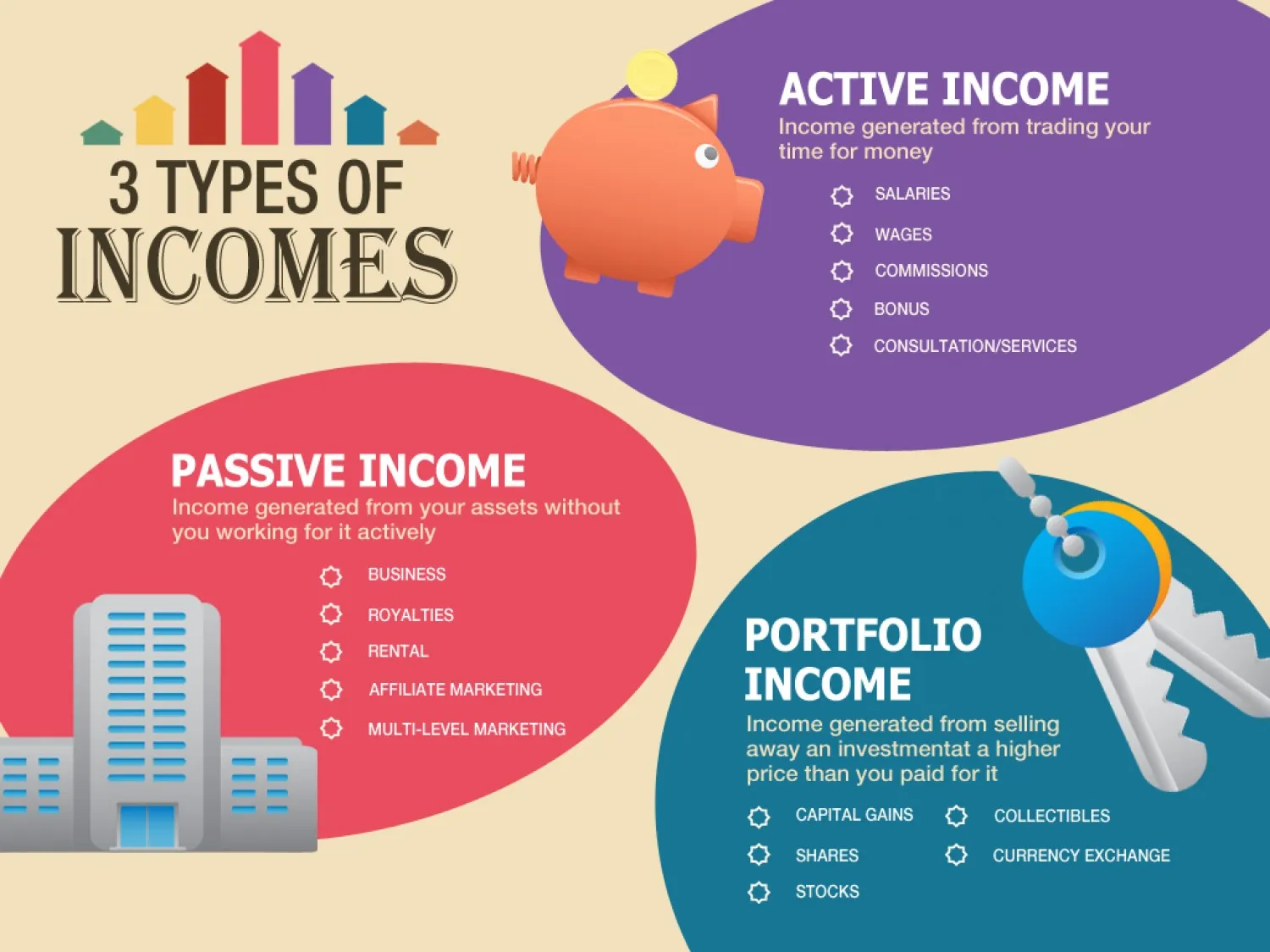
To truly grasp the dynamics of passive income vs active income, we first need to clearly define each. The fundamental difference between active and passive income lies in the amount of direct effort and time required to generate the earnings.
Active Income (Earned Income):
-
Definition: Active income, also known as earned income, is money received for services performed. It is directly tied to your time, effort, and active participation. If you stop working, this income typically stops.
-
Key Characteristics:
-
Direct Time-for-Money Exchange: You trade your time, skills, and labor directly for money.
-
Requires Ongoing Effort: Regular work is required to maintain the income stream.
-
Taxed Heavily: Often subject to income tax, Social Security, and Medicare taxes (payroll taxes).
-
Linear Growth: Income usually grows linearly with hours worked or performance, though promotions can provide jumps.
-
-
Examples:
-
Salary or Wages: What you earn from a traditional full-time or part-time job. This is the most common active income definition.
-
Hourly Pay: Money earned based on the hours you clock in.
-
Commissions: Earnings based on sales or performance (e.g., real estate agents, sales professionals).
-
Tips: Income received from customers for service (e.g., waiters, delivery drivers).
-
Freelance Income: Money earned from specific projects or gigs where you are actively providing a service (e.g., a freelance writer completing an article, a graphic designer creating a logo). This could also be seen as a side hustle vs passive income.
-
Business Profits (Actively Managed): Profits from a business where you are actively involved in the day-to-day operations and management. This would fall under active income jobs.
-
Passive Income:
-
Definition: Passive income is money earned with minimal ongoing effort once the initial work or investment is done. It's often described as "making money while you sleep," though it typically requires significant upfront effort or capital.
-
Key Characteristics:
-
Minimal Ongoing Effort: Once set up, the income requires little to no active work to maintain its flow.
-
Requires Upfront Investment (Time or Money): The "passive" nature comes after a period of significant initial effort or a substantial financial investment.
-
Potential for Scalability: Can often grow without a direct correlation to your ongoing time investment.
-
Tax Treatment Varies: Can sometimes be taxed differently than active income, often more favorably (e.g., capital gains, qualified dividends, depreciation benefits for real estate).
-
-
Examples of Passive Income Streams:
-
Rental Properties: Income from tenants after the property is acquired and initially set up. This leads to the question is rental income passive or active? (Generally passive, though it requires some management).
-
Dividend Stocks: Income from shares of stock that pay out a portion of company profits to shareholders. This relates to are stocks considered passive income?
-
Interest from Savings Accounts/Bonds: Earnings from money deposited in banks or invested in debt instruments.
-
Royalties: Income from intellectual property (e.g., books, music, patents) that continues to pay out after the initial creation.
-
Peer-to-Peer Lending: Lending money to individuals through platforms and earning interest.
-
Affiliate Marketing: Earning commissions by promoting other people's products, where the content (e.g., blog post, video) continues to generate leads.
-
Digital Products: Selling e-books, online courses, or stock photos where the product is created once and sold repeatedly.
-
The core distinction is simple: active income means you're actively working for the money, while passive income means your money or your creations are working for you after an initial setup phase. Both are vital for effective long-term income strategies.
2. Which is better: passive income or active income?
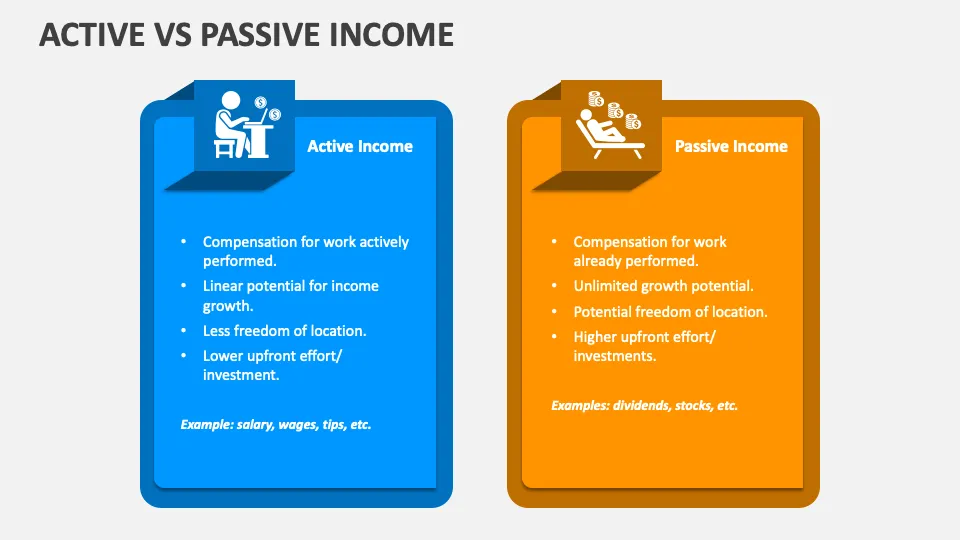

The question Which is better: passive income or active income? is a bit of a trick question, as the "better" strategy depends entirely on your financial goals, current resources, risk tolerance, and life stage. For most people, a combination of both is the most effective and sustainable long-term income strategies for building wealth with passive income.
Let's look at the strengths of each:
Strengths of Active Income:
-
Immediate and Predictable: Active income is often the fastest and most reliable way to generate money quickly. You work, you get paid. This predictability is crucial for covering immediate living expenses and building initial savings.
-
Higher Earning Potential (Initially): For many, especially early in their careers, active income offers the highest earning potential through salaries, promotions, and bonuses. It's usually much easier to increase your active income significantly in the short term by working more hours, getting a raise, or switching jobs, than it is to build a substantial passive income stream from scratch.
-
Less Upfront Capital/Effort: You don't necessarily need a large initial investment of money or time (beyond skill development) to start earning active income. You just need a job or clients.
-
Skill Development and Networking: Active jobs provide valuable experience, skills, and networking opportunities that can lead to career advancement and even ideas for future passive income streams.
-
Direct Control: You generally have direct control over your income by choosing to work more, negotiate raises, or seek better-paying jobs.
Strengths of Passive Income:
-
Financial Freedom and Time Leverage: This is the ultimate appeal. Once established, passive income can significantly reduce your reliance on active work, freeing up your time to pursue passions, spend with family, travel, or retire early. This is why why is passive income important for financial freedom?
-
Scalability: Many passive income streams (like digital products, royalties, or investments) can generate increasing returns without a proportional increase in your time investment. You write a book once, and it can sell for years.
-
Diversification: Having multiple streams of income, both active and passive, creates a more robust financial safety net. If one income source falters (e.g., job loss), others can help cushion the blow.
-
Tax Advantages: Certain types of passive income (like qualified dividends or rental income with depreciation) can sometimes be taxed more favorably than active income.
-
Wealth Accumulation: Investing for passive income often involves accumulating assets (stocks, real estate) that not only generate income but also appreciate in value over time, accelerating wealth building. This is central to building wealth with passive income.
-
"Money Works for You": It allows your money to grow and generate more money, rather than relying solely on your personal labor.
The "Better" Long-Term Strategy: A Hybrid Approach
For most, the optimal long-term income strategies involves a strategic blend:
-
Use Active Income to Fund Passive Income: Leverage your active income to save and invest in assets that will generate passive income. This is the most common path to how to build passive income.
-
Build a Foundation: Active income covers your immediate living expenses, allowing you to gradually build up passive income streams without putting your financial stability at risk.
-
Diversify and Reduce Reliance: As your passive income grows, it reduces your reliance on a single active income source, offering greater security and flexibility.
-
Ultimate Goal: Financial Independence: The ultimate aim for many is to have enough passive income to cover their living expenses, effectively allowing them to choose whether or not to engage in active work. This directly addresses can passive income replace a job?
So, which is better: passive income or active income? Active income is generally necessary to start building wealth and cover initial expenses. Passive income is the goal that provides true financial freedom and leverages your money for long-term growth. The smartest strategy is to aggressively pursue active income in your working years to fund and build substantial passive income streams for your future.
3. Can passive income replace active income?
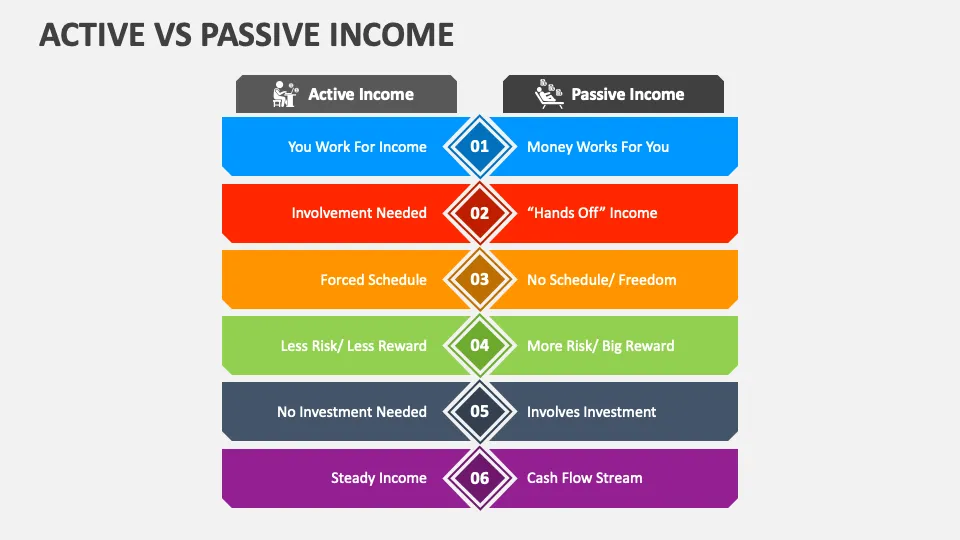

The dream scenario for many is that can passive income replace active income? The answer is a resounding yes, it absolutely can, but it requires significant upfront effort, consistent investment, and a strategic approach. This is the core reason why is passive income important for financial freedom?
Here's what it takes for passive income to replace active income:
-
Sufficient Scale and Diversification:
-
Coverage of Expenses: For passive income to replace active income, it must consistently generate enough money to cover all of your essential living expenses (housing, food, utilities, transportation, healthcare, etc.) and ideally, some discretionary spending as well.
-
Multiple Streams: Relying on a single passive income stream for full income replacement is risky. A diversified portfolio of passive income streams (e.g., rental properties, dividend stocks, royalties, online businesses) provides more stability and reduces the impact if one source underperforms.
-
-
Significant Upfront Investment (Time or Money):
-
Capital-Intensive Passive Income: Many of the most reliable passive income streams require substantial upfront capital. For example, buying enough rental properties to generate significant cash flow, or accumulating a large enough dividend stock portfolio to live off the dividends, can take years or decades of saving and investing for passive income from active income.
-
Time-Intensive Passive Income: Other passive income streams, like creating a successful online course, writing a popular e-book, or building a high-traffic affiliate website, require a massive upfront time investment. You put in hundreds or thousands of hours of work without immediate pay, with the hope that the asset will generate income later with minimal maintenance. This is the "active work for passive gain" model often seen in how to build passive income.
-
-
Ongoing (Minimal) Management:
-
While passive income implies "minimal ongoing effort," it rarely means zero effort. Even truly passive sources like dividend stocks require monitoring your portfolio and making occasional adjustments. Rental properties need occasional tenant management, maintenance, or property manager oversight. Digital products might need updates or customer support.
-
The goal is to minimize the effort, not eliminate it entirely, unless you fully outsource (e.g., property managers), which adds to the cost.
-
-
Risk Management:
-
All passive income streams carry risks. Rental properties can have vacancies or unexpected repairs. Stock dividends can be cut. Online businesses can face algorithm changes or increased competition.
-
To fully replace active income, you need to manage these risks, often through diversification and maintaining a strong financial buffer. This ties into what are the risks of relying on passive income?
-
-
Financial Independence (FI) Threshold:
-
The concept of Financial Independence (FI) is essentially achieving a state where your passive income covers your living expenses, allowing you to retire early or pursue passion projects without needing a traditional job. This is the ultimate goal of leveraging passive income vs active income. Many follow the "4% rule" (saving 25 times your annual expenses) as a guideline, aiming for their investments to generate 4% of that sum annually as passive income.
-
The Path to Replacement:
Most people replace their active income with passive income by:
-
Earning and Saving Aggressively: Maximizing active income to save and invest as much as possible.
-
Strategic Investing: Putting that saved capital into income-generating assets like real estate, dividend stocks, or starting a scalable business.
-
Reinvesting Earnings: Initially, reinvesting passive income back into the income-generating assets to compound growth and accelerate the accumulation of more income.
In summary, can passive income replace active income? Yes, it's the ultimate goal for financial freedom. However, it's not a shortcut to wealth. It's the result of strategic planning, disciplined saving, initial hard work (either in terms of labor or capital), and smart investing for passive income.
4. What are the best passive income ideas?

The term "best" for best passive income ideas is subjective and depends on your starting capital, risk tolerance, skills, and time availability. What's "best" for a seasoned investor might be completely unfeasible for a beginner. However, we can categorize popular and effective passive income streams that consistently feature in discussions about how to build passive income.
Here are some of the most common and effective passive income ideas, broken down by their primary requirement (capital vs. time/skill):
A. Capital-Intensive Passive Income Ideas (Requires Significant Upfront Money):
These generally involve investing for passive income and leveraging your existing capital.
-
Dividend Stocks/ETFs:
-
How it Works: Invest in companies that regularly pay out a portion of their profits to shareholders (dividends). You receive cash payments simply for holding the shares. Dividend Exchange Traded Funds (ETFs) offer diversification.
-
Passivity Level: High. Requires minimal ongoing effort once invested, though monitoring is wise.
-
Pros: Can be very hands-off, diversification possible, potential for capital appreciation.
-
Cons: Requires substantial capital for meaningful income, dividends can be cut, market risk. This relates to are stocks considered passive income? (Yes, dividends are a form of passive income).
-
-
Rental Properties:
-
How it Works: Purchase residential or commercial properties and rent them out to tenants. Income comes from rent payments.
-
Passivity Level: Medium to Low. While the rent comes in passively, managing tenants, maintenance, and potential vacancies requires some effort or the cost of a property manager. This directly addresses is rental income passive or active? (It's generally considered passive if you outsource management, but can be very active if you do it all yourself).
-
Pros: Potential for consistent cash flow, property appreciation, tax benefits (depreciation).
-
Cons: Requires significant capital (down payment), ongoing maintenance, tenant issues, market fluctuations, can be very hands-on without a manager.
-
-
Interest from Bonds/Peer-to-Peer Lending/High-Yield Savings Accounts (HYSA):
-
How it Works: Lend money to governments/corporations (bonds), individuals (P2P lending), or simply deposit it in an HYSA. You earn interest on your capital.
-
Passivity Level: Very High. Almost entirely hands-off.
-
Pros: Generally lower risk (especially government bonds/HYSAs), predictable income.
-
Cons: Returns are often lower than other passive income sources, P2P lending has higher default risk.
-
-
REITs (Real Estate Investment Trusts):
-
How it Works: Invest in companies that own, operate, or finance income-producing real estate. You essentially own a piece of a diversified portfolio of properties without the hassle of direct ownership. They typically pay high dividends.
-
Passivity Level: High.
-
Pros: Diversified real estate exposure without direct property management, high dividend yields, liquid (can buy/sell easily like stocks).
-
Cons: Subject to stock market fluctuations and real estate market risks, no depreciation benefits for individual investors.
-
B. Time/Skill-Intensive Passive Income Ideas (Requires Significant Upfront Work):
These involve creating an asset once that continues to generate income. This often starts as a side hustle vs passive income.
-
Create and Sell Digital Products (E-books, Online Courses, Stock Photos/Videos):
-
How it Works: Create a digital product once (e.g., write an e-book, film an online course, design templates, produce stock media) and sell it repeatedly with minimal additional effort.
-
Passivity Level: Medium. Requires significant upfront creation time, but low ongoing effort (marketing, minor updates, customer service).
-
Pros: High-profit margins (once created), scalable, low overhead.
-
Cons: Requires specific skills/knowledge, marketing effort to reach an audience, competition.
-
-
Affiliate Marketing:
-
How it Works: Create content (blog, YouTube channel, social media) that recommends products or services, and earn a commission when your audience makes a purchase through your unique link.
-
Passivity Level: Medium. Requires significant upfront content creation and audience building, but ongoing income flows from existing content.
-
Pros: Low startup cost, no need to create your own product.
-
Cons: Requires consistent content creation initially, building trust and authority, reliance on external products/companies.
-
-
Start a Blog/YouTube Channel with Ads:
-
How it Works: Create valuable content that attracts a large audience, and then monetize it through display advertising (e.g., Google AdSense), sponsored content, or product sales.
-
Passivity Level: Medium. Requires massive upfront content creation and SEO/promotion, but older content can continue to generate ad revenue for years.
-
Pros: Can become very scalable with large audience, builds authority.
-
Cons: Very slow to start, requires consistent effort for a long time before seeing significant income, reliance on ad networks.
-
-
Royalties (Books, Music, Patents):
-
How it Works: Create intellectual property (write a book, compose music, invent something), and earn a percentage of sales each time it's used or sold.
-
Passivity Level: High. Once created, the income is largely hands-off.
-
Pros: Can provide long-term, consistent income.
-
Cons: Requires significant creative talent/invention, success is not guaranteed, highly competitive.
-
-
Develop an App or Software:
-
How it Works: Create a mobile app or software that solves a problem, and generate income through sales, subscriptions, or in-app advertising.
-
Passivity Level: Medium. Significant upfront development, but recurring income with minimal updates/support.
-
Pros: High earning potential if successful, scalable.
-
Cons: Requires coding/development skills, high competition, ongoing maintenance/updates.
-
When considering best passive income ideas, remember that "passive" doesn't mean "no work at all." It means the bulk of the work is upfront, allowing for future income with minimal effort. The key to successful building wealth with passive income is often starting with active effort or existing capital to fund these streams.
5. Is rental income passive or active?
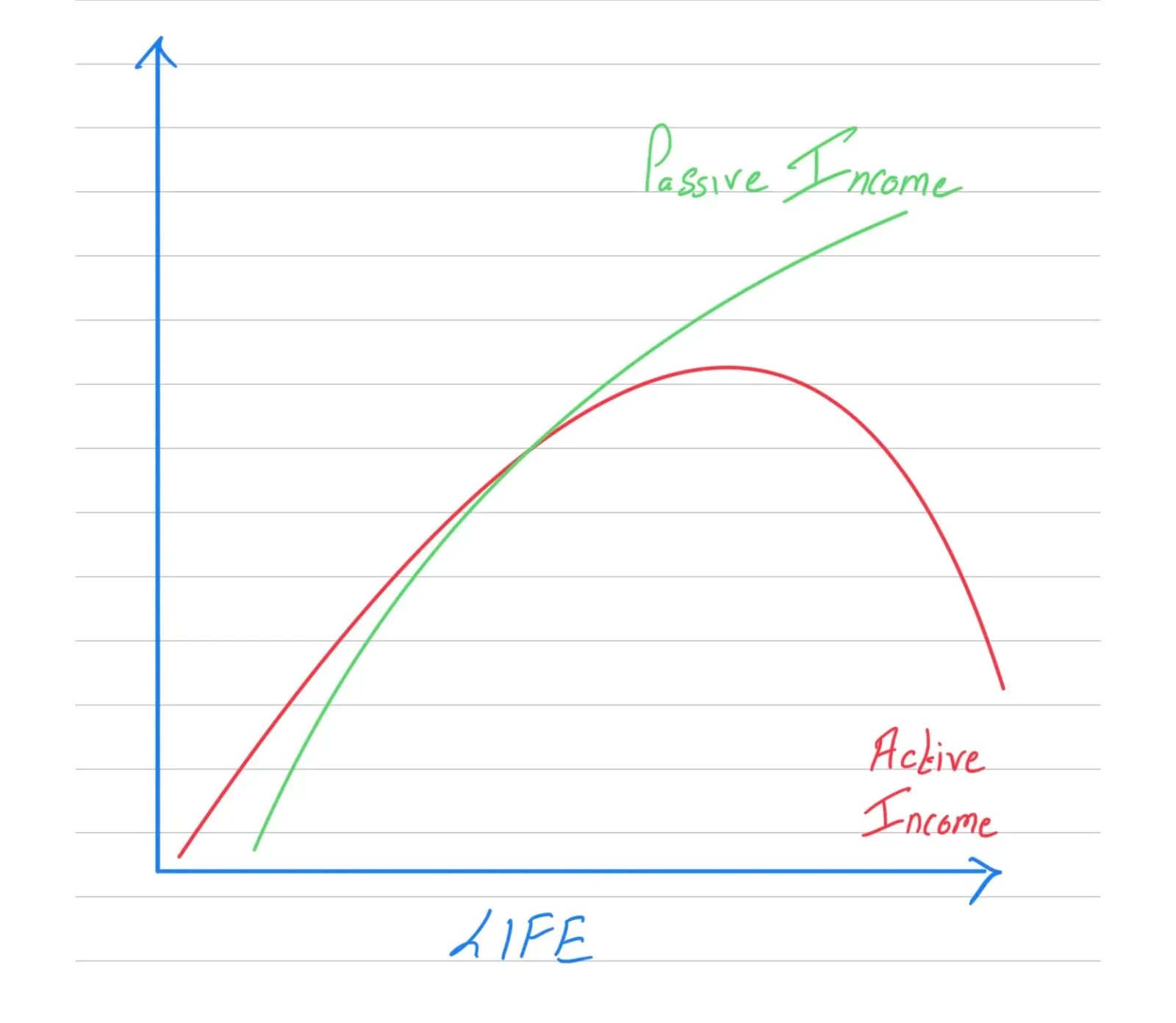

The question Is rental income passive or active? is a classic point of contention and a great example of the nuance involved in defining passive income vs active income. The most accurate answer is: it depends on your level of involvement.
Here's how rental income can fall on the spectrum from highly active to truly passive:
1. Highly Active Rental Income (Often Treated as Active/Earned Income for Tax Purposes if "Material Participation"):
If you are a hands-on landlord who actively manages their properties, your rental income can feel very much like an active job.
-
Your Involvement:
-
Finding and Screening Tenants: Advertising vacancies, showing properties, running background checks.
-
Lease Management: Drafting and signing leases, handling renewals.
-
Rent Collection: Chasing late payments, dealing with non-payment.
-
Maintenance and Repairs: Directly handling or arranging all repairs, emergencies (e.g., burst pipes at 2 AM), ongoing maintenance (lawn care, cleaning).
-
Property Management: Overseeing multiple properties, handling legal issues (evictions), property inspections.
-
-
Why it's Active: This level of involvement requires consistent time, effort, problem-solving, and direct labor. If you stopped doing these tasks, the income stream would quickly falter or cease.
2. Moderately Passive Rental Income (The Most Common Scenario):
This is where many landlords find themselves. They manage some aspects but might outsource others.
-
Your Involvement: You might handle tenant screening and lease agreements, but outsource all maintenance to contractors. Or you might use a property management software that automates rent collection and tenant communication to a large degree.
-
Why it's Moderately Passive: It's not fully hands-off, but it's not a full-time job. You still need to dedicate some time and attention, but it's not a direct time-for-money exchange for every dollar earned.
3. Truly Passive Rental Income (Generally Requires Outsourcing):
To make rental income truly passive, you need to completely remove yourself from the day-to-day operations.
-
Your Involvement: You hire a professional property management company to handle everything:
-
Marketing and tenant acquisition.
-
Rent collection and financial reporting.
-
All maintenance and repairs (they coordinate contractors).
-
Tenant communication and issues.
-
Legal matters (evictions, lease disputes).
-
-
Why it's Passive: Your main ongoing effort is reviewing financial statements from the property manager and ensuring they are doing their job. You receive rental income with minimal personal effort.
-
Consideration: This level of passivity comes at a cost, as property managers typically charge 8-12% of the gross monthly rent, which reduces your net income.
Tax Implications (IRS Perspective):
The IRS has specific rules for classifying rental income as "passive" or "active" for tax purposes. This depends on whether you "materially participate" in the activity. Generally, if you spend more than 500 hours a year on a rental activity, or if it's your main business activity, it might be considered non-passive ("active"). This impacts your ability to deduct passive losses against active income.
Conclusion:
So, is rental income passive or active? It has the potential to be very passive if you hire a property manager and treat it as a hands-off investment. However, if you are a do-it-yourself landlord, it can be just as demanding as an active income job. For many, it starts off active as they learn the ropes and build capital, then transitions to more passive as they scale and outsource. It's one of the most common examples of passive income people pursue, but its true passivity depends on strategic management.
6. How do I start earning passive income?
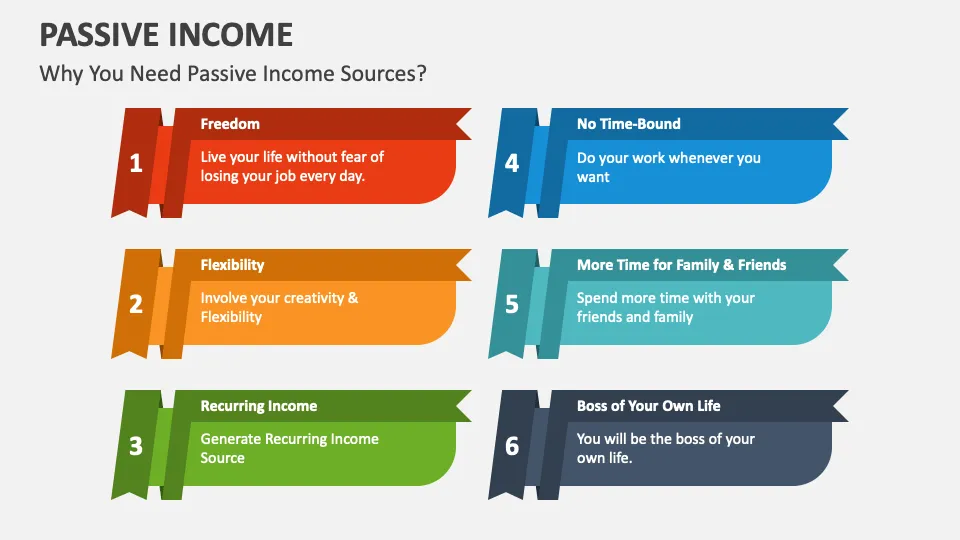

The desire to know how do I start earning passive income? is a common first step towards financial freedom. While the "passive" part sounds easy, the "start" often requires significant active effort or upfront capital. Building passive income streams is a strategic process, not a quick fix.
Here's a step-by-step guide on how to begin your journey to earning passive income:
-
Build a Strong Financial Foundation (Active Income is Key Here):
-
Why: You need stability before you can invest time or money into passive income.
-
Action: Ensure you have a stable source of active income (your primary job). Build an emergency fund (3-6 months of living expenses) to cover unexpected costs. Pay off high-interest debt (like credit card debt) – the interest you pay on debt will negate any passive income you earn.
-
Connection to Passive Income: Your active income is your fuel to fund your passive income ventures.
-
-
Define Your Goals and Resources:
-
Why: Different passive income streams require different levels of capital, time, skills, and risk tolerance.
-
Action:
-
Capital Available: How much money can you realistically invest? (e.g., $100, $1,000, $10,000+?)
-
Time Available: How many hours per week/month can you dedicate to upfront setup? (e.g., 5 hours, 20 hours, full-time for a period?)
-
Skills/Interests: What are you good at? What are you passionate about? (e.g., writing, coding, photography, teaching, researching investments).
-
Risk Tolerance: Are you comfortable with market fluctuations or do you prefer lower-risk, lower-return options?
-
-
Connection to Passive Income: This assessment will help you narrow down the best passive income ideas that are realistic for you as a passive income for beginners.
-
-
Choose a Passive Income Strategy (or two):
-
Why: Based on your goals and resources, select one or two methods to focus on. Don't try to do everything at once.
-
Action: Consider options from the "Best Passive Income Ideas" section, such as:
-
If you have capital: Start investing for passive income through dividend stocks/ETFs, REITs, or saving for a down payment on a rental property.
-
If you have time/skills but less capital: Focus on creating digital products (e-books, courses), building an affiliate marketing website, starting a blog with ad revenue potential, or exploring royalties from creative work.
-
-
Connection to Passive Income: This selection becomes your specific long-term income strategies.
-
-
Learn and Plan:
-
Why: Success in any passive income venture requires knowledge.
-
Action: Research your chosen strategy thoroughly. Read books, take courses (online or offline), listen to podcasts, and follow experts in that specific niche. Create a detailed plan for execution, including timelines and milestones.
-
Connection to Passive Income: This initial learning is part of the "active effort for passive gain" principle.
-
-
Take Action and Build the Asset:
-
Why: Passive income doesn't just appear; it must be built.
-
Action: This is where the "active" work for passive gain comes in.
-
For Investments: Open a brokerage account, fund it, and start investing consistently in dividend stocks or REITs. If saving for real estate, diligently save your down payment.
-
For Content/Products: Start writing your e-book, filming your course, building your website, creating your app. This is the side hustle vs passive income phase, where it feels very much like a side hustle.
-
-
Connection to Passive Income: This phase is the most active and crucial for establishing the foundation of your passive income streams.
-
-
Automate and Monitor (Then Scale):
-
Why: The goal is minimal ongoing effort.
-
Action: Set up automated investments (e.g., dollar-cost averaging into dividend ETFs). If you're managing a rental, consider hiring a property manager. For digital products, ensure sales and delivery are automated. For content, monitor analytics and update as needed.
-
Connection to Passive Income: Once the system is largely automated, you move closer to true passivity. Then, once one stream is stable, you can repeat the process to build diversified passive income streams, furthering your goal of building wealth with passive income.
-
Starting to earn passive income is a journey that often begins with leveraging your active income and dedicating significant upfront effort. But with consistent effort and smart choices, you can gradually shift the balance and move closer to financial freedom.
7. Are stocks considered passive income?


The question Are stocks considered passive income? can be answered with a qualified yes, specifically in the form of dividends. However, it's important to distinguish between different ways you might make money from stocks.
Let's break it down:
-
Dividends (YES, Passive Income):
-
What they are: Dividends are payments made by a company to its shareholders, usually out of its profits. They are typically paid quarterly, though some companies pay monthly or annually.
-
How they're passive: Once you own the stock, you simply receive the dividend payments. You don't need to do any work to earn them. They arrive in your brokerage account (or are reinvested) regardless of whether you're working, sleeping, or on vacation. This is a classic example of investing for passive income.
-
Tax Implications: Dividends can be "qualified" or "non-qualified," which affects their tax treatment. Qualified dividends are taxed at lower long-term capital gains rates, making them a tax-efficient form of passive income for many.
-
Examples: Investing in established, financially stable companies known for their dividend payouts, or investing in Dividend Exchange Traded Funds (ETFs) which hold a basket of dividend-paying stocks. These are highly regarded examples of passive income.
-
-
Capital Gains (NOT Passive Income):
-
What they are: This is the profit you make when you sell a stock for a higher price than you bought it.
-
Why they're not passive: While the growth in the stock's value might occur passively, realizing that gain requires an active decision to sell the stock. You are performing an action (selling) to convert that gain into cash. If you don't sell, you don't realize the profit.
-
Connection to Income: While it adds to your wealth, it's not a recurring income stream in the same way dividends are. It's a one-time lump sum (or periodic lump sums if you sell portions of your holdings).
-
The Role of Active Management:
Even with dividend stocks, the level of passivity can vary based on your management style:
-
Truly Passive: If you invest in broad market index funds or dividend ETFs and simply hold them for the long term, reinvesting dividends, this is largely hands-off. You're leveraging the fund manager's expertise.
-
Moderately Active: If you're actively researching individual dividend stocks, frequently buying and selling, or performing in-depth analysis to optimize your portfolio, this involves more active effort. While the dividends themselves are passive, the management to maximize them can be active. This bridges the passive income vs active income gap.
Conclusion:
So, are stocks considered passive income? Yes, primarily through the dividends they pay. Capital gains are a form of wealth appreciation, but they require an active decision to realize. For those looking to build genuine passive income streams through investments, focusing on a strategy of investing for passive income in solid dividend-paying stocks or diversified dividend ETFs is a powerful and popular approach. It's a cornerstone of building wealth with passive income for many individuals aiming for long-term financial security.
8. Why is passive income important for financial freedom?
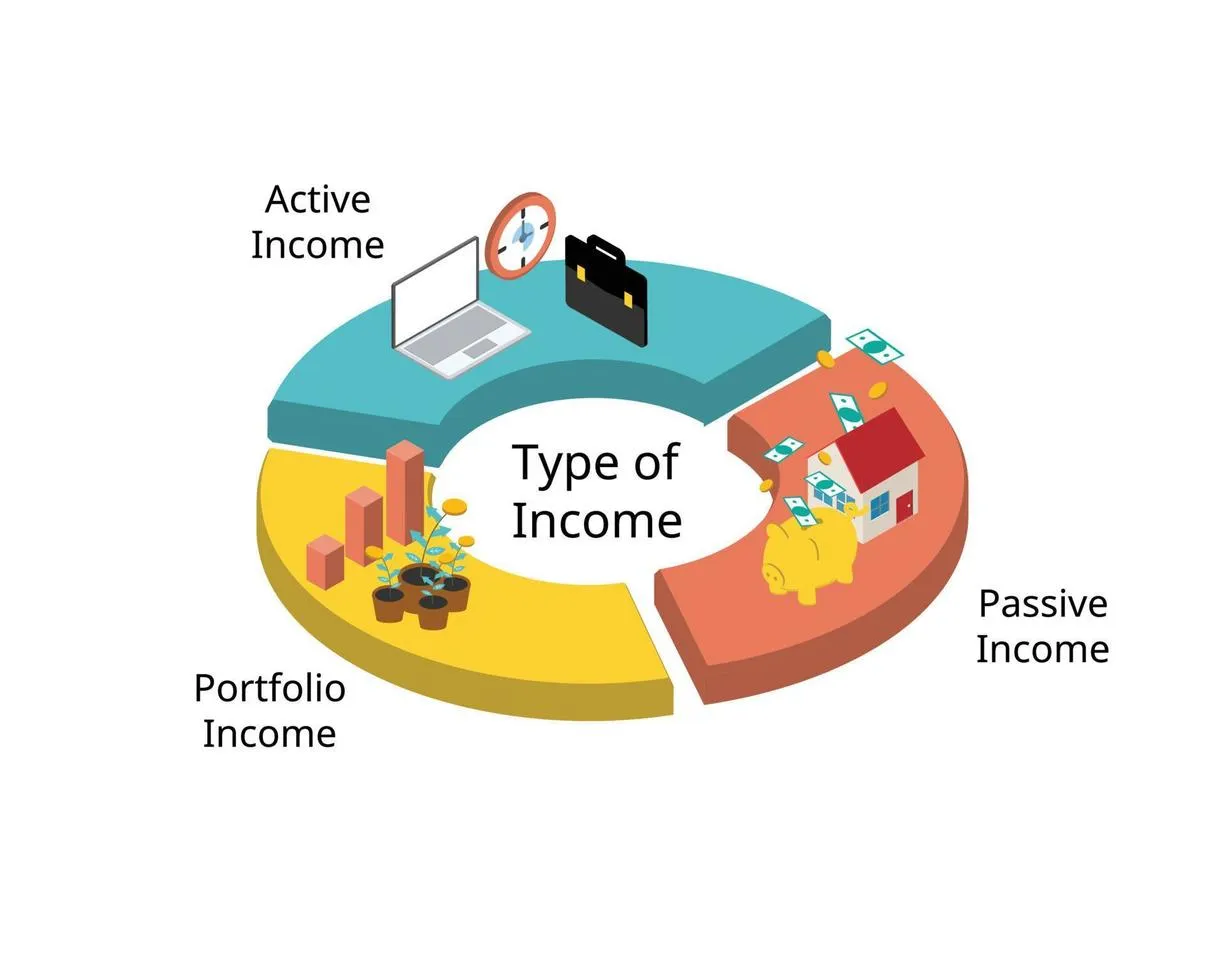

The concept of financial freedom is deeply intertwined with passive income. For many, the ability to generate money without trading their active time for it is the very definition of being financially free. So, why is passive income important for financial freedom? It fundamentally shifts the power dynamic from "you work for money" to "money works for you," providing security, flexibility, and choice.
Here are the key reasons why passive income is crucial for achieving financial freedom:
-
Decoupling Income from Time:
-
The Core Principle: Active income directly ties your earnings to the hours you work. Financial freedom means having the option to no longer have to work. Passive income achieves this decoupling. When your expenses are covered by income that doesn't require your daily presence, you gain control over your most valuable asset: your time. This is the essence of why passive income vs earned income is such a critical distinction.
-
Impact: You can choose to work, pursue passions, spend time with family, travel, volunteer, or retire without financial constraint.
-
-
Building a Sustainable Financial Safety Net:
-
Diversification: Relying solely on active income means your entire financial well-being is tied to one job or career. If you lose your job, become ill, or face economic downturns, your income ceases. Passive income streams provide diversification. If one stream falters (e.g., job loss), your passive income can cushion the blow and keep you afloat. This is central to long-term income strategies.
-
Reduced Stress: Knowing that bills will be paid even if your active income stops provides immense peace of mind and reduces financial anxiety.
-
-
Accelerated Wealth Accumulation:
-
Compounding: Many passive income streams, especially those generated from investments (like dividends or rental profits), can be reinvested. This allows for compounding, where your earnings start earning more money, significantly accelerating your wealth growth over time. This is a cornerstone of building wealth with passive income.
-
Leverage: Creating passive income often involves leveraging assets (e.g., using a mortgage to buy a rental property, or investing capital in stocks) that can grow in value and generate income simultaneously.
-
-
Early Retirement Potential:
-
If your passive income consistently covers your living expenses, you essentially achieve financial independence, regardless of your age. This means you have the option to retire much earlier than traditional retirement age, without waiting for social security or a large pension. This directly addresses can passive income replace a job? (Yes, at the point of financial independence).
-
-
Inflation Protection:
-
Well-chosen passive income streams, such as rental income (which can be adjusted for inflation) or dividend stocks (from companies that grow their dividends), can provide a hedge against inflation. Your passive income can grow over time, maintaining or even increasing your purchasing power.
-
-
Legacy Building:
-
Assets that generate passive income (real estate, investment portfolios) can be passed down to future generations, providing a lasting financial legacy and contributing to intergenerational wealth.
-
In essence, why is passive income important for financial freedom? Because it transforms your relationship with money from a constant pursuit to a supportive partner. It buys you time, reduces stress, accelerates wealth, and ultimately gives you the power to choose how you spend your life, rather than being dictated by the need to earn an active paycheck. This is the ultimate goal of anyone exploring long-term income strategies.
9. Can you live off passive income alone?

The ultimate financial dream for many is to reach a point where can you live off passive income alone? The answer is yes, it is entirely possible, and for a significant number of people, it's the definition of financial independence or early retirement. However, achieving this state requires substantial planning, discipline, and often, a considerable amount of upfront capital or sustained effort. This directly relates to why is passive income important for financial freedom?
Here's what it entails to live off passive income alone:
-
Matching or Exceeding Expenses:
-
The Golden Rule: Your annual passive income must consistently meet or exceed your annual living expenses. This includes all necessities (housing, food, utilities, transportation, healthcare) and your desired discretionary spending (travel, entertainment, hobbies).
-
Tracking Expenses: To know if you can live off passive income, you first need a crystal-clear understanding of your current and projected expenses. Many striving for this goal meticulously track every dollar.
-
-
Substantial Asset Accumulation:
-
Capital Required: For most people, living off passive income alone means accumulating a significant amount of income-generating assets. For instance, if you want $50,000 a year in passive income from dividend stocks with a 4% yield, you'd need a portfolio of $1,250,000 ($50,000 / 0.04). If you rely on rental properties, you'd need enough properties to generate that net cash flow after expenses.
-
The "FI Number": This target amount of assets (often 25 times annual expenses, based on the 4% rule) is commonly referred to as your "Financial Independence (FI) Number."
-
-
Diversification of Passive Income Streams:
-
Risk Mitigation: Relying on a single passive income source for all your expenses is very risky. If that source falters (e.g., a tenant vacates for a year, a company cuts its dividend, an online business gets hit by an algorithm change), your entire lifestyle could be jeopardized.
-
Multiple Sources: To truly live off passive income alone, it's highly advisable to have diversified passive income streams (e.g., a mix of dividend stocks, REITs, a rental property, and perhaps a low-maintenance digital product). This protects you against volatility in any single asset class. This is crucial given what are the risks of relying on passive income?
-
-
Ongoing (Minimal) Management and Monitoring:
-
"Passive" does not mean "zero work." Even when living off passive income, you'll still need to:
-
Monitor your investment portfolios.
-
Review property management reports.
-
Handle tax implications.
-
Potentially update digital products or marketing strategies.
-
Make strategic adjustments based on market conditions or personal needs.
-
-
The goal is for this work to be minimal and flexible, a choice rather than a necessity.
-
-
Healthcare Considerations:
-
This is a significant factor, especially in countries without universal healthcare. If you're no longer working a traditional job with employer-sponsored health insurance, you'll need to factor in the potentially high cost of private health insurance or self-funded healthcare expenses when calculating your required passive income.
-
-
Inflation Adjustments:
-
Your passive income needs to keep pace with inflation to maintain your purchasing power over decades. Strategies like investing in dividend growth stocks or increasing rental income over time are important.
-
Conclusion:
Can you live off passive income alone? Yes, but it's the culmination of successful long-term income strategies that prioritize building wealth with passive income. It typically involves years of aggressive saving from active income, strategic investing for passive income, and a commitment to disciplined management to ensure the income streams are robust enough to cover all expenses indefinitely, with sufficient diversification to weather financial storms. It's a journey that shifts the focus from accumulating money to accumulating freedom.
10. What are the risks of relying on passive income?


While the allure of passive income is strong and its potential for financial freedom undeniable, it's crucial to understand what are the risks of relying on passive income? No income stream is entirely risk-free, and assuming otherwise can lead to significant financial vulnerabilities, especially if you plan to can you live off passive income alone?
Here are the primary risks associated with relying heavily on passive income:
-
Lack of True Passivity / Hidden Work:
-
Risk: Many so-called "passive" income streams require significant upfront work or ongoing, albeit minimal, maintenance. Forgetting this can lead to burnout or neglected income sources.
-
Example: A rental property is "passive" with a manager, but you still need to vet the manager, handle major decisions, and deal with unexpected crises. An online course needs updates, marketing, and customer service. If you underestimate the true effort required, your income can decline. This blurs the passive income vs active income line.
-
-
Market Volatility and Loss of Capital:
-
Risk: Income from investments (stocks, bonds, REITs) is subject to market fluctuations. The value of your underlying assets can decrease, and dividend payouts can be cut during economic downturns.
-
Example: A recession might lead companies to reduce or suspend dividends, directly impacting your income. Real estate values can drop, making it harder to sell or refinance, and leading to negative equity.
-
Mitigation: Diversification across different asset classes and multiple income streams helps mitigate this risk.
-
-
Income Inconsistency and Unpredictability:
-
Risk: Many passive income streams are not as predictable as a consistent salary. Rental income can be affected by vacancies or non-paying tenants. Online ad revenue can fluctuate with traffic or algorithm changes.
-
Example: A rental property sitting vacant for a few months means zero income but ongoing expenses (mortgage, taxes, insurance). This can quickly deplete an emergency fund if you're solely relying on that income.
-
Mitigation: Maintain a larger cash reserve (an emergency fund specifically for your passive income streams) to smooth out income fluctuations.
-
-
Reliance on External Factors/Platforms:
-
Risk: Many online passive income models rely on platforms (e.g., Amazon for e-books, Google for ads, YouTube for video revenue, social media algorithms). Changes to their policies, algorithms, or commission structures can severely impact your income without warning.
-
Example: A change in Google's search algorithm could drastically reduce traffic to your affiliate marketing website, cutting your income overnight.
-
Mitigation: Diversify across platforms, build an audience you "own" (e.g., email list), and avoid putting all your eggs in one platform's basket.
-
-
High Upfront Capital or Time Investment with Delayed/Uncertain Returns:
-
Risk: Many passive income streams require significant initial investment (money or time) before they generate meaningful income. There's no guarantee that the effort/capital will yield the desired returns.
-
Example: You might spend a year writing an e-book or developing an app, only for it to sell poorly. You might invest in a rental property that experiences unexpected, costly repairs shortly after purchase.
-
Mitigation: Thorough research, realistic expectations, and starting with smaller, more manageable ventures (especially for passive income for beginners).
-
-
Inflation Risk:
-
Risk: If your passive income doesn't keep pace with inflation, your purchasing power will erode over time, making it harder to cover your living expenses in the long run.
-
Example: A fixed income stream from a bond might feel good today, but in 20 years, it could buy significantly less.
-
Mitigation: Invest in assets that have historically kept pace with or outpaced inflation (e.g., stocks from growth companies, real estate with rent increases) and regularly review your strategy.
-
-
Tax Complexity:
-
Risk: While some passive income sources offer tax advantages, others can add complexity to your tax situation, potentially requiring professional help.
-
Mitigation: Understand the tax implications of each income stream and factor in potential tax liabilities.
-
While building wealth with passive income offers incredible opportunities, it's essential to approach it with a clear understanding of these risks. Diversification, realistic expectations, continuous monitoring, and maintaining an adequate emergency fund are crucial strategies to mitigate these downsides and ensure your long-term income strategies remain robust.
Passive Income vs. Active Income: Crafting Your Financial Masterpiece
And there you have it – a comprehensive journey through the intricate world of passive income vs active income. We've peeled back the layers, demystifying the difference between active and passive income, exploring vibrant examples of passive income, and laying out the roadmap for how to build passive income.
The true revelation isn't about pitting these two income types against each other as rivals. It's about recognizing them as powerful partners in your quest for financial stability and ultimate freedom. Your active income is the dependable engine, the fuel that powers your current lifestyle and provides the capital or initial effort needed to ignite your passive income streams. It's the sturdy foundation upon which all your financial aspirations are built.
Then comes the magic of passive income – the ability to generate money even when you're not actively trading your time. This is where dreams of early retirement, extended travel, or simply more time for what truly matters begin to take tangible shape. It's the powerful answer to why is passive income important for financial freedom?
The most effective long-term income strategies isn't about choosing one over the other. It's about a dynamic interplay: strategically leveraging your active income to intelligently investing for passive income or to build income-generating assets that work for you. Yes, can passive income replace active income? Absolutely, for those who commit to the upfront effort and smart planning.
But remember the crucial caveats: true passivity often comes with initial active work or significant capital, and even established passive streams carry risks that demand diversification and vigilance. Don't fall for the "get rich quick" myths; sustainable passive income is built on a foundation of discipline, patience, and smart choices.
So, go forth! Maximize your active income, learn about the best passive income ideas that align with your resources and skills, and start sowing the seeds of your financial future. The blend of consistent effort and strategic investment is your recipe for building wealth with passive income and crafting a life where your money truly works for you.
Maybe you are interested:

Frugal Living vs Minimalism: What’s the Real Difference (and Which One Fits You Best)?
Credit Card vs Debit Card: Which Is the Smarter Choice for Your Wallet?
More Like This


How to Improve Your Life: A Complete Guide to Personal Growth
by Emily Cooper
Why is sleep important? What do you need to know about sleep?
by Emily Cooper